
Ο γρανίτης είναι ένας τύπος πυριγενούς πετρώματος που εξορύσσεται για την εξαιρετική αντοχή, πυκνότητα, ανθεκτικότητα και αντοχή στη διάβρωση. Αλλά ο γρανίτης είναι επίσης πολύ ευέλικτος - δεν είναι μόνο για τετράγωνα και ορθογώνια! Στην πραγματικότητα, εργαζόμαστε με σιγουριά με εξαρτήματα γρανίτη που κατασκευάζονται σε σχήματα, γωνίες και καμπύλες όλων των παραλλαγών σε τακτική βάση - με εξαιρετικά αποτελέσματα.
Through our state of the art processing, cut surfaces can be exceptionally flat. These qualities make granite the ideal material to create custom-size and custom-design machine bases and metrology components. Granite is:
■ μηχανικά επεξεργάσιμο
■ ακριβώς επίπεδο όταν κοπεί και ολοκληρωθεί
■ ανθεκτικό στη σκουριά
■ ανθεκτικό
■ μακράς διαρκείας
Τα γρανιτένια εξαρτήματα καθαρίζονται επίσης εύκολα. Όταν δημιουργείτε προσαρμοσμένα σχέδια, φροντίστε να επιλέξετε γρανίτη για τα ανώτερα πλεονεκτήματά του.
ΠΡΟΤΥΠΑ / ΕΦΑΡΜΟΓΕΣ ΥΨΗΛΗΣ ΦΘΟΡΑΣ
Ο γρανίτης που χρησιμοποιείται από την ZHHIMG για τα τυπικά προϊόντα επιφανειακών πλακών μας έχει υψηλή περιεκτικότητα σε χαλαζία, η οποία παρέχει μεγαλύτερη αντοχή στη φθορά και τις ζημιές. Τα χρώματα Superior Black μας έχουν χαμηλά ποσοστά απορρόφησης νερού, ελαχιστοποιώντας την πιθανότητα σκουριάς των ακριβών μετρητών σας κατά την τοποθέτηση στις πλάκες. Τα χρώματα γρανίτη που προσφέρει η ZHHIMG έχουν ως αποτέλεσμα λιγότερη αντανάκλαση, πράγμα που σημαίνει λιγότερη κόπωση των ματιών για τα άτομα που χρησιμοποιούν τις πλάκες. Έχουμε επιλέξει τους τύπους γρανίτη μας λαμβάνοντας υπόψη τη θερμική διαστολή, σε μια προσπάθεια να διατηρήσουμε αυτό το φαινόμενο ελάχιστο.
CUSTOM APPLICATIONS
Όταν η εφαρμογή σας απαιτεί μια πλάκα με προσαρμοσμένα σχήματα, ένθετα με σπείρωμα, εγκοπές ή άλλες κατεργασίες, θα πρέπει να επιλέξετε ένα υλικό όπως το Black Jinan Black. Αυτό το φυσικό υλικό προσφέρει ανώτερη ακαμψία, εξαιρετική απόσβεση κραδασμών και βελτιωμένη κατεργασιμότητα.
Είναι σημαντικό να σημειωθεί ότι το χρώμα από μόνο του δεν αποτελεί ένδειξη των φυσικών ιδιοτήτων της πέτρας. Γενικά, το χρώμα του γρανίτη σχετίζεται άμεσα με την παρουσία ή την απουσία ορυκτών, τα οποία μπορεί να μην έχουν καμία σχέση με τις ιδιότητες που καθιστούν καλό υλικό για επιφανειακές πλάκες. Υπάρχουν ροζ, γκρι και μαύροι γρανίτες που είναι εξαιρετικοί για επιφανειακές πλάκες, καθώς και μαύροι, γκρι και ροζ γρανίτες που είναι εντελώς ακατάλληλοι για εφαρμογές ακριβείας. Τα κρίσιμα χαρακτηριστικά του γρανίτη, όπως σχετίζονται με τη χρήση του ως υλικό επιφανειακών πλακών, δεν έχουν καμία σχέση με το χρώμα και είναι τα εξής:
■ Δυσκαμψία (παραμόρφωση υπό φορτίο - υποδεικνύεται από το Μέτρο Ελαστικότητας)
■ Σκληρότητα
■ Πυκνότητα
■ Αντοχή στη φθορά
■ Σταθερότητα
■ Πορώδες
Έχουμε δοκιμάσει πολλά υλικά γρανίτη και τα συγκρίνουμε. Τελικά, έχουμε το αποτέλεσμα ότι ο μαύρος γρανίτης Jinan είναι το καλύτερο υλικό που έχουμε γνωρίσει ποτέ. Ο ινδικός μαύρος γρανίτης και ο νοτιοαφρικανικός γρανίτης είναι παρόμοιοι με τον μαύρο γρανίτη Jinan, αλλά οι φυσικές τους ιδιότητες είναι κατώτερες από τον μαύρο γρανίτη Jinan. Η ZHHIMG θα συνεχίσει να αναζητά περισσότερα υλικά γρανίτη στον κόσμο και να συγκρίνει τις φυσικές τους ιδιότητες.
Για να συζητήσουμε περισσότερα σχετικά με τον γρανίτη που είναι κατάλληλος για το έργο σας, επικοινωνήστε μαζί μαςinfo@zhhimg.com.
Διαφορετικοί κατασκευαστές χρησιμοποιούν διαφορετικά πρότυπα. Υπάρχουν πολλά πρότυπα στον κόσμο.
Πρότυπο DIN, ASME B89.3.7-2013 ή Ομοσπονδιακή Προδιαγραφή GGG-P-463c (Πλάκες Επιφάνειας Γρανίτη) και ούτω καθεξής ως βάση για τις προδιαγραφές τους.
Και μπορούμε να κατασκευάσουμε πλάκα ακριβείας επιθεώρησης γρανίτη σύμφωνα με τις απαιτήσεις σας. Καλώς ήρθατε να επικοινωνήσετε μαζί μας αν θέλετε να μάθετε περισσότερες πληροφορίες σχετικά με περισσότερα πρότυπα.
Η επιπεδότητα μπορεί να θεωρηθεί ως η ύπαρξη όλων των σημείων στην επιφάνεια εντός δύο παράλληλων επιπέδων, του επιπέδου βάσης και του επιπέδου οροφής. Η μέτρηση της απόστασης μεταξύ των επιπέδων είναι η συνολική επιπεδότητα της επιφάνειας. Αυτή η μέτρηση επιπεδότητας συνήθως έχει μια ανοχή και μπορεί να περιλαμβάνει έναν χαρακτηρισμό βαθμού.
Για παράδειγμα, οι ανοχές επιπεδότητας για τρεις τυπικές ποιότητες ορίζονται στην ομοσπονδιακή προδιαγραφή όπως καθορίζεται από τον ακόλουθο τύπο:
■ Εργαστηριακή Βαθμολογία AA = (40 + διαγώνιος τετράγωνο/25) x 0,000001" (μονόπλευρο)
■ Βαθμός Επιθεώρησης A = Βαθμός Εργαστηρίου AA x 2
■ Εργαστηριακή Βαθμίδα Β = Εργαστηριακή Βαθμίδα ΑΑ x 4.
Για πλάκες επιφάνειας τυπικού μεγέθους, εγγυόμαστε ανοχές επιπεδότητας που υπερβαίνουν τις απαιτήσεις αυτής της προδιαγραφής. Εκτός από την επιπεδότητα, τα πρότυπα ASME B89.3.7-2013 και Federal Specification GGG-P-463c καλύπτουν θέματα όπως: ακρίβεια επαναλαμβανόμενων μετρήσεων, ιδιότητες υλικών των γρανιτών επιφανειακών πλακών, φινίρισμα επιφάνειας, θέση σημείου στήριξης, ακαμψία, αποδεκτές μέθοδοι επιθεώρησης, εγκατάσταση ενθεμάτων με σπείρωμα κ.λπ.
Οι πλάκες επιφάνειας γρανίτη ZHHIMG και οι πλάκες επιθεώρησης γρανίτη πληρούν ή υπερβαίνουν όλες τις απαιτήσεις που ορίζονται σε αυτήν την προδιαγραφή. Προς το παρόν, δεν υπάρχει καθορισμένη προδιαγραφή για πλάκες γωνίας γρανίτη, παράλληλες πλάκες ή κύριες πλάκες τετραγώνων.
Και μπορείτε να βρείτε τους τύπους για άλλα πρότυπα στοΛΗΨΗ.
Καταρχάς, είναι σημαντικό να διατηρείτε την πλάκα καθαρή. Η αερομεταφερόμενη λειαντική σκόνη είναι συνήθως η μεγαλύτερη πηγή φθοράς σε μια πλάκα, καθώς τείνει να ενσωματώνεται στα κομμάτια εργασίας και στις επιφάνειες επαφής των μετρητών. Δεύτερον, καλύψτε την πλάκα σας για να την προστατεύσετε από τη σκόνη και τις ζημιές. Η διάρκεια ζωής μπορεί να παραταθεί καλύπτοντας την πλάκα όταν δεν χρησιμοποιείται, περιστρέφοντας την πλάκα περιοδικά, ώστε να μην χρησιμοποιείται υπερβολικά μια μεμονωμένη περιοχή, και αντικαθιστώντας τα χαλύβδινα μαξιλαράκια επαφής στα μετρητικά όργανα με μαξιλαράκια καρβιδίου. Επίσης, αποφύγετε να τοποθετείτε τρόφιμα ή αναψυκτικά στην πλάκα. Σημειώστε ότι πολλά αναψυκτικά περιέχουν είτε ανθρακικό είτε φωσφορικό οξύ, το οποίο μπορεί να διαλύσει τα μαλακότερα μέταλλα και να αφήσει μικρές κοιλότητες στην επιφάνεια.
Αυτό εξαρτάται από τον τρόπο χρήσης του πιάτου. Εάν είναι δυνατόν, συνιστούμε να καθαρίζετε το πιάτο στην αρχή της ημέρας (ή της βάρδιας εργασίας) και ξανά στο τέλος. Εάν το πιάτο λερωθεί, ιδιαίτερα με λιπαρά ή κολλώδη υγρά, πιθανότατα θα πρέπει να καθαριστεί αμέσως.
Καθαρίζετε την πλάκα τακτικά με υγρό ή καθαριστικό επιφανειακών πλακών ZHHIMG Waterless. Η επιλογή των διαλυμάτων καθαρισμού είναι σημαντική. Εάν χρησιμοποιηθεί πτητικός διαλύτης (ακετόνη, διαλυτικό βερνικιού, αλκοόλη κ.λπ.), η εξάτμιση θα ψύξει την επιφάνεια και θα την παραμορφώσει. Σε αυτήν την περίπτωση, είναι απαραίτητο να αφήσετε την πλάκα να ομαλοποιηθεί πριν από τη χρήση, διαφορετικά θα προκύψουν σφάλματα μέτρησης.
Ο χρόνος που απαιτείται για την ομαλοποίηση του πιάτου ποικίλλει ανάλογα με το μέγεθος του πιάτου και την ποσότητα ψύξης. Μία ώρα θα πρέπει να είναι επαρκής για μικρότερα πιάτα. Δύο ώρες μπορεί να χρειαστούν για μεγαλύτερα πιάτα. Εάν χρησιμοποιηθεί καθαριστικό με βάση το νερό, θα υπάρξει επίσης κάποια ψύξη με εξάτμιση.
Η πλάκα θα συγκρατεί επίσης νερό, κάτι που θα μπορούσε να προκαλέσει σκουριά στα μεταλλικά μέρη που έρχονται σε επαφή με την επιφάνεια. Ορισμένα καθαριστικά αφήνουν επίσης ένα κολλώδες υπόλειμμα αφού στεγνώσουν, το οποίο προσελκύει την αερομεταφερόμενη σκόνη και στην πραγματικότητα αυξάνει τη φθορά αντί να τη μειώνει.
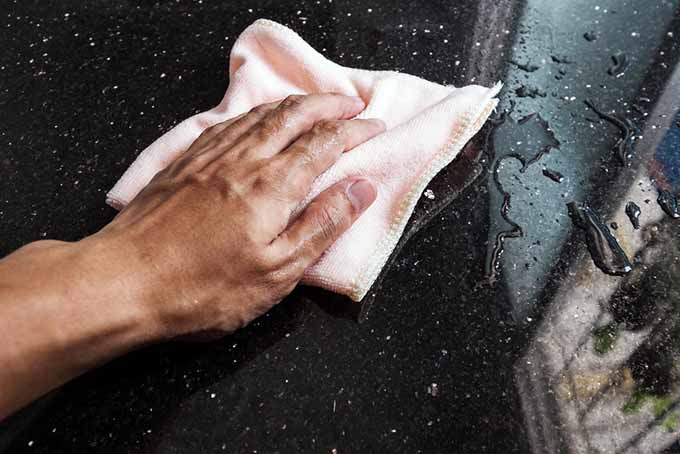
Αυτό εξαρτάται από τη χρήση της πλάκας και το περιβάλλον. Συνιστούμε μια νέα πλάκα ή ένα εξάρτημα ακριβείας γρανίτη να υποβληθεί σε πλήρη επαναβαθμονόμηση εντός ενός έτους από την αγορά. Εάν η πλάκα επιφάνειας γρανίτη πρόκειται να χρησιμοποιηθεί εντατικά, ίσως είναι σκόπιμο να συντομευτεί αυτό το διάστημα σε έξι μήνες. Ο μηνιαίος έλεγχος για σφάλματα επαναλαμβανόμενης μέτρησης χρησιμοποιώντας ηλεκτρονικό αλφάδι ή παρόμοια συσκευή θα δείξει τυχόν αναπτυσσόμενα σημεία φθοράς και θα διαρκέσει μόνο λίγα λεπτά. Αφού προσδιοριστούν τα αποτελέσματα της πρώτης επαναβαθμονόμησης, το διάστημα βαθμονόμησης μπορεί να παραταθεί ή να συντομευτεί όπως επιτρέπεται ή απαιτείται από το εσωτερικό σας σύστημα ποιότητας.
Μπορούμε να σας προσφέρουμε υπηρεσίες που θα σας βοηθήσουν να επιθεωρήσετε και να βαθμονομήσετε την πλάκα επιφάνειας γρανίτη σας.

Υπάρχουν αρκετές πιθανές αιτίες για αποκλίσεις μεταξύ των βαθμονομήσεων:
- Η επιφάνεια πλύθηκε με ζεστό ή κρύο διάλυμα πριν από τη βαθμονόμηση και δεν της δόθηκε αρκετός χρόνος για να ομαλοποιηθεί.
- Η πλάκα δεν στηρίζεται σωστά
- Αλλαγή θερμοκρασίας
- Πρόχειρα
- Άμεσο ηλιακό φως ή άλλη ακτινοβολούμενη θερμότητα στην επιφάνεια της πλάκας. Βεβαιωθείτε ότι ο φωτισμός οροφής δεν θερμαίνει την επιφάνεια.
- Διακυμάνσεις στην κατακόρυφη κλίση θερμοκρασίας μεταξύ χειμώνα και καλοκαιριού (Εάν είναι δυνατόν, να γνωρίζετε τη θερμοκρασία κατακόρυφης κλίσης κατά τη στιγμή που εκτελείται η βαθμονόμηση.)
- Δεν δόθηκε επαρκής χρόνος για ομαλοποίηση της πλάκας μετά την αποστολή.
- Ακατάλληλη χρήση εξοπλισμού επιθεώρησης ή χρήση μη βαθμονομημένου εξοπλισμού
- Αλλαγή επιφάνειας λόγω φθοράς
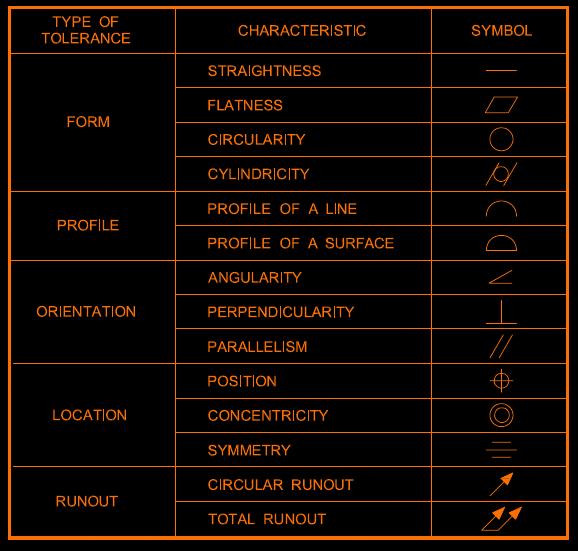
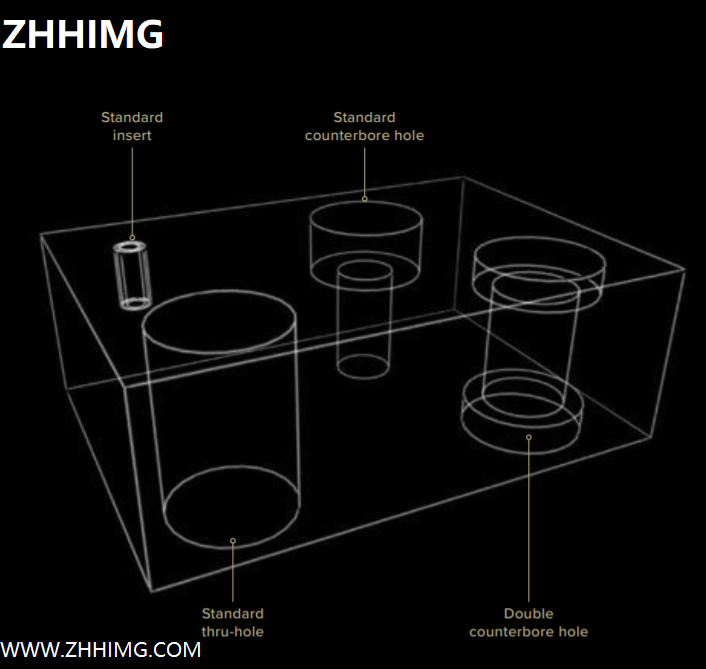
Πόσα είδη τρυπών υπάρχουν σε γρανίτη ακριβείας;
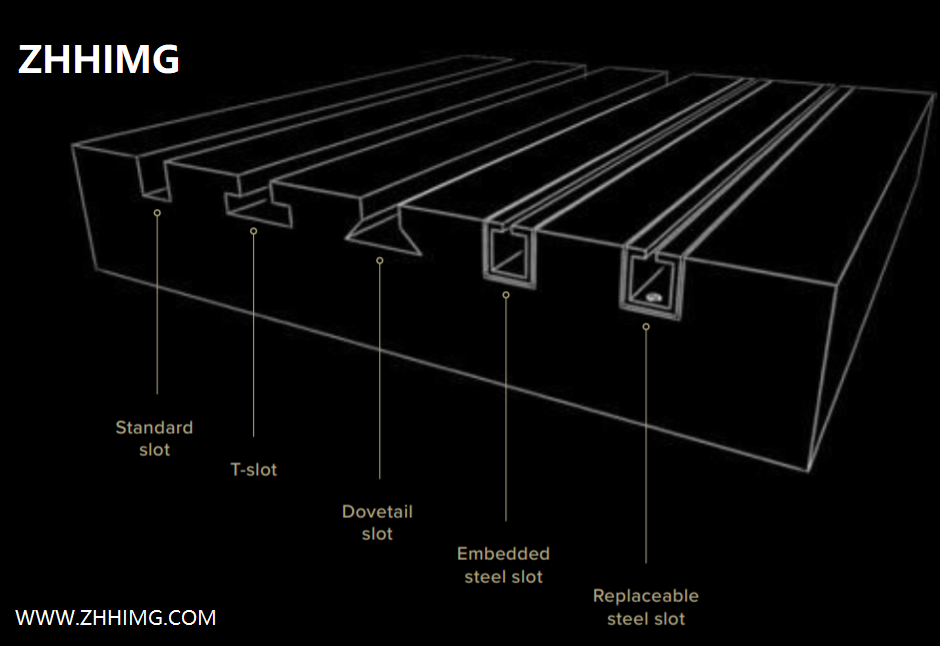
Υποδοχές σε εξαρτήματα ακριβείας από γρανίτη
Για πολλά εργοστάσια, αίθουσες επιθεώρησης και εργαστήρια, οι πλάκες ακριβείας από γρανίτη χρησιμοποιούνται ως βάση για ακριβείς μετρήσεις. Επειδή κάθε γραμμική μέτρηση εξαρτάται από μια ακριβή επιφάνεια αναφοράς από την οποία λαμβάνονται οι τελικές διαστάσεις, οι πλάκες επιφάνειας παρέχουν το καλύτερο επίπεδο αναφοράς για την επιθεώρηση εργασίας και τη διάταξη πριν από την κατεργασία. Είναι επίσης ιδανικές βάσεις για την πραγματοποίηση μετρήσεων ύψους και επιφανειών μέτρησης. Επιπλέον, ο υψηλός βαθμός επιπεδότητας, σταθερότητας, συνολικής ποιότητας και κατασκευής τις καθιστούν καλή επιλογή για την τοποθέτηση εξελιγμένων μηχανικών, ηλεκτρονικών και οπτικών συστημάτων μέτρησης. Για οποιαδήποτε από αυτές τις διαδικασίες μέτρησης, είναι επιτακτική ανάγκη να διατηρούνται οι πλάκες επιφάνειας βαθμονομημένες.
Repeat Measurements and Flatness
Τόσο η επιπεδότητα όσο και οι επαναλαμβανόμενες μετρήσεις είναι κρίσιμες για να διασφαλιστεί μια επιφάνεια ακριβείας. Ως επιπεδότητα μπορεί να θεωρηθεί ότι όλα τα σημεία της επιφάνειας περιέχονται σε δύο παράλληλα επίπεδα, το επίπεδο βάσης και το επίπεδο της οροφής. Η μέτρηση της απόστασης μεταξύ των επιπέδων είναι η συνολική επιπεδότητα της επιφάνειας. Αυτή η μέτρηση επιπεδότητας συνήθως έχει μια ανοχή και μπορεί να περιλαμβάνει έναν χαρακτηρισμό βαθμού.
The flatness tolerances for three standard grades are defined in the federal specification as determined by the following formula:
Πρότυπο DIN, πρότυπο GB, πρότυπο ASME, πρότυπο JJS... διαφορετική χώρα με διαφορετική βάση...
Περισσότερες λεπτομέρειες σχετικά με το πρότυπο.
In addition to flatness, repeatability must be ensured. A repeat measurement is a measurement of local flatness areas. It is a measurement taken anywhere on the surface of a plate that will repeat within the stated tolerance. Controlling local area flatness to a tighter tolerance than overall flatness guarantees a gradual change in surface flatness profile, thereby minimizing local errors.
Για να διασφαλιστεί ότι μια πλάκα επιφάνειας πληροί τόσο τις προδιαγραφές επιπεδότητας όσο και τις προδιαγραφές επαναλαμβανόμενων μετρήσεων, οι κατασκευαστές πλακών επιφάνειας γρανίτη θα πρέπει να χρησιμοποιούν την Ομοσπονδιακή Προδιαγραφή GGG-P-463c ως βάση για τις προδιαγραφές τους. Αυτό το πρότυπο καλύπτει την ακρίβεια επαναλαμβανόμενων μετρήσεων, τις ιδιότητες των υλικών της πλάκας επιφάνειας γρανίτη, το φινίρισμα της επιφάνειας, τη θέση του σημείου στήριξης, την ακαμψία, τις αποδεκτές μεθόδους επιθεώρησης και την εγκατάσταση των ενθεμάτων με σπείρωμα.
Checking Plate Accuracy
Ακολουθώντας μερικές απλές οδηγίες, μια επένδυση σε μια πλάκα επιφάνειας από γρανίτη θα πρέπει να διαρκέσει για πολλά χρόνια. Ανάλογα με τη χρήση της πλάκας, το περιβάλλον του εργαστηρίου και την απαιτούμενη ακρίβεια, η συχνότητα ελέγχου της ακρίβειας της πλάκας επιφάνειας ποικίλλει. Ένας γενικός εμπειρικός κανόνας είναι ότι μια νέα πλάκα πρέπει να υποβάλλεται σε πλήρη επαναβαθμονόμηση εντός ενός έτους από την αγορά. Εάν η πλάκα χρησιμοποιείται συχνά, συνιστάται να συντομεύσετε αυτό το διάστημα σε έξι μήνες.
Before a surface plate has worn beyond specification for overall flatness, it will show worn or wavy posts. Monthly inspection for repeat measurement errors using a repeat reading gage will identify wear spots. A repeat reading gage is a high-precision instrument that detects local error and can be displayed on a high magnification electronic amplifier.
An effective inspection program should include regular checks with an autocollimator, providing actual calibration of overall flatness traceable to National Institute of Standards and Technology (NIST). Comprehensive calibration by the manufacturer or an independent company is necessary from time to time.
Variations Between Calibrations
Σε ορισμένες περιπτώσεις, υπάρχουν διακυμάνσεις μεταξύ των βαθμονομήσεων της πλάκας επιφάνειας. Μερικές φορές, παράγοντες όπως η αλλαγή της επιφάνειας που προκύπτει από φθορά, η λανθασμένη χρήση εξοπλισμού επιθεώρησης ή η χρήση μη βαθμονομημένου εξοπλισμού μπορούν να ευθύνονται για αυτές τις διακυμάνσεις. Οι δύο πιο συνηθισμένοι παράγοντες, ωστόσο, είναι η θερμοκρασία και η στήριξη.
One of the most important variables is temperature. For instance, the surface might have been washed with a hot or cold solution prior to calibration and not allowed sufficient time to normalize. Other causes of temperature change include drafts of cold or hot air, direct sunlight, overhead lighting or other sources of radiant heat on the surface of the plate.
There also can be variations in the vertical temperature gradient between winter and summer. In some cases, the plate is not allowed sufficient time to normalize after shipment. It is a good idea to record the vertical gradient temperature at the time the calibration is performed.
Another common cause for calibration variation is a plate that is improperly supported. A surface plate should be supported at three points, ideally located 20% of the length in from the ends of the plate. Two supports should be located 20% of the width in from the long sides, and the remaining support should be centered.
Only three points can rest solidly on anything but a precision surface. Attempting to support the plate at more than three points will cause the plate to receive its support from various combinations of three points, which will not be the same three points on which it was supported during production. This will introduce errors as the plate deflects to conform to the new support arrangement. Consider using steel stands with support beams designed to line up with the proper support points. Stands for this purpose are generally available from the surface plate manufacturer.
If the plate is properly supported, precise leveling is only necessary if an application specifies it. Leveling is not necessary to maintain the accuracy of a properly supported plate.
Extend Plate Life
Η τήρηση ορισμένων οδηγιών θα μειώσει τη φθορά σε μια πλάκα επιφάνειας γρανίτη και τελικά θα παρατείνει τη διάρκεια ζωής της.
Καταρχάς, είναι σημαντικό να διατηρείτε την πλάκα καθαρή. Η αερομεταφερόμενη λειαντική σκόνη είναι συνήθως η μεγαλύτερη πηγή φθοράς σε μια πλάκα, καθώς τείνει να ενσωματώνεται στα τεμάχια εργασίας και στις επιφάνειες επαφής των μετρητών.
It also is important to cover plates to protect it from dust and damage. Wear life can be extended by covering the plate when not in use.
Περιστρέφετε την πλάκα περιοδικά, ώστε να μην καταπονείται υπερβολικά καμία περιοχή. Επίσης, συνιστάται η αντικατάσταση των χαλύβδινων μαξιλαριών επαφής στις μετρήσεις με μαξιλαράκια καρβιδίου.
Avoid setting food or soft drinks on the plate. Many soft drinks contain either carbonic or phosphoric acid, which can dissolve the softer minerals and leave small pits in the surface.
Where to Relap
Όταν μια πλάκα επιφάνειας γρανίτη χρειάζεται επαναβαφή, σκεφτείτε αν θα πρέπει να πραγματοποιηθεί αυτή η υπηρεσία επί τόπου ή στο κέντρο βαθμονόμησης. Είναι πάντα προτιμότερο η πλάκα να επαναβαφτεί στο εργοστάσιο ή σε ειδική εγκατάσταση. Ωστόσο, εάν η πλάκα δεν είναι πολύ φθαρμένη, γενικά εντός 0,001 ίντσας από την απαιτούμενη ανοχή, μπορεί να επαναβαφτεί επί τόπου. Εάν μια πλάκα έχει φθαρεί σε σημείο που να είναι περισσότερο από 0,001 ίντσα εκτός ανοχής ή εάν έχει άσχημες λακκούβες ή εγκοπές, τότε θα πρέπει να σταλεί στο εργοστάσιο για λείανση πριν από την επαναβαφή.
A calibration facility has the equipment and factory setting providing the optimum conditions for proper plate calibration and rework if necessary.
Πρέπει να δίνεται μεγάλη προσοχή στην επιλογή ενός τεχνικού βαθμονόμησης και ανακατασκευής επιφανειών επί τόπου. Ζητήστε πιστοποίηση και επαληθεύστε ότι ο εξοπλισμός που θα χρησιμοποιήσει ο τεχνικός διαθέτει ανιχνεύσιμη βαθμονόμηση. Η εμπειρία είναι επίσης ένας σημαντικός παράγοντας, καθώς χρειάζονται πολλά χρόνια για να μάθετε πώς να γυαλίζετε σωστά τον γρανίτη ακριβείας.
Critical measurements start with a precision granite surface plate as a baseline. By ensuring a reliable reference by using a properly calibrated surface plate, manufacturers have one of the essential tools for reliable measurements and better quality parts.Q
Checklist for Calibration Variations
1. Η επιφάνεια πλύθηκε με ζεστό ή κρύο διάλυμα πριν από τη βαθμονόμηση και δεν της δόθηκε αρκετός χρόνος για να ομαλοποιηθεί.
2. Η πλάκα δεν έχει στηριχθεί σωστά.
3. Αλλαγή θερμοκρασίας.
4. Προσχέδια.
5. Άμεσο ηλιακό φως ή άλλη ακτινοβολούμενη θερμότητα στην επιφάνεια της πλάκας. Βεβαιωθείτε ότι ο φωτισμός οροφής δεν θερμαίνει την επιφάνεια.
6. Διακυμάνσεις στην κατακόρυφη κλίση της θερμοκρασίας μεταξύ χειμώνα και καλοκαιριού. Εάν είναι δυνατόν, να γνωρίζετε τη θερμοκρασία κατακόρυφης κλίσης κατά τη στιγμή που εκτελείται η βαθμονόμηση.
7. Δεν δόθηκε επαρκής χρόνος στην πλάκα για να ομαλοποιηθεί μετά την αποστολή.
8. Ακατάλληλη χρήση εξοπλισμού επιθεώρησης ή χρήση μη βαθμονομημένου εξοπλισμού.
9. Αλλαγή επιφάνειας λόγω φθοράς.
Tech Tips
- Επειδή κάθε γραμμική μέτρηση εξαρτάται από μια ακριβή επιφάνεια αναφοράς από την οποία λαμβάνονται οι τελικές διαστάσεις, οι πλάκες επιφάνειας παρέχουν το καλύτερο επίπεδο αναφοράς για την επιθεώρηση της εργασίας και τη διάταξη πριν από την κατεργασία.
- Controlling local area flatness to a tighter tolerance than overall flatness guarantees a gradual change in surface flatness profile, thereby minimizing local errors.
- Ένα αποτελεσματικό πρόγραμμα επιθεώρησης θα πρέπει να περιλαμβάνει τακτικούς ελέγχους με αυτόματο κολλιμητή, παρέχοντας πραγματική βαθμονόμηση της συνολικής επιπεδότητας ανιχνεύσιμη στην Εθνική Αρχή Επιθεώρησης.
Μεταξύ των ορυκτών σωματιδίων που αποτελούν τον γρανίτη, περισσότερο από το 90% είναι άστριος και χαλαζίας, εκ των οποίων ο άστριος είναι ο περισσότερος. Ο άστριος είναι συχνά λευκός, γκριζόχρωμος και κόκκινος σαν σάρκα, και ο χαλαζίας είναι ως επί το πλείστον άχρωμος ή γκριζωπός, που αποτελούν το βασικό χρώμα του γρανίτη. Ο άστριος και ο χαλαζίας είναι σκληρά ορυκτά και είναι δύσκολο να μετακινηθούν με ατσάλινο μαχαίρι. Όσον αφορά τις σκούρες κηλίδες στον γρανίτη, κυρίως μαύρο μαρμαρυγία, υπάρχουν και κάποια άλλα ορυκτά. Αν και ο βιοτίτης είναι σχετικά μαλακός, η ικανότητά του να αντιστέκεται στην καταπόνηση δεν είναι ασθενής και ταυτόχρονα υπάρχει σε μικρή ποσότητα στον γρανίτη, συχνά λιγότερο από 10%. Αυτή είναι η υλική κατάσταση στην οποία ο γρανίτης είναι ιδιαίτερα ισχυρός.
Ένας άλλος λόγος για τον οποίο ο γρανίτης είναι ανθεκτικός είναι ότι τα ορυκτά σωματίδια του είναι στενά συνδεδεμένα μεταξύ τους και ενσωματωμένα το ένα μέσα στο άλλο. Οι πόροι συχνά αντιπροσωπεύουν λιγότερο από το 1% του συνολικού όγκου του βράχου. Αυτό δίνει στον γρανίτη την ικανότητα να αντέχει σε ισχυρές πιέσεις και δεν διαπερνάται εύκολα από την υγρασία.
Τα γρανιτένια εξαρτήματα είναι κατασκευασμένα από πέτρα χωρίς σκουριά, αντοχή σε οξέα και αλκάλια, καλή αντοχή στη φθορά και μεγάλη διάρκεια ζωής, χωρίς ειδική συντήρηση. Τα γρανιτένια εξαρτήματα ακριβείας χρησιμοποιούνται κυρίως στην κατασκευή εργαλείων της μηχανουργικής βιομηχανίας. Ως εκ τούτου, ονομάζονται γρανιτένια εξαρτήματα ακριβείας ή γρανιτένια εξαρτήματα. Τα χαρακτηριστικά των γρανιτένιων εξαρτημάτων ακριβείας είναι βασικά τα ίδια με αυτά των πλατφορμών γρανίτη. Εισαγωγή στη σχεδίαση και τη μέτρηση των γρανιτένιων εξαρτημάτων ακριβείας: Η κατεργασία ακριβείας και η τεχνολογία μικροκατεργασίας αποτελούν σημαντικές κατευθύνσεις ανάπτυξης της βιομηχανίας κατασκευής μηχανημάτων και έχουν γίνει ένας σημαντικός δείκτης για τη μέτρηση ενός υψηλού τεχνολογικού επιπέδου. Η ανάπτυξη της τεχνολογίας αιχμής και της αμυντικής βιομηχανίας είναι άρρηκτα συνδεδεμένη με την κατεργασία ακριβείας και την τεχνολογία μικροκατεργασίας. Τα γρανιτένια εξαρτήματα μπορούν να ολισθαίνουν ομαλά κατά τη μέτρηση, χωρίς στασιμότητα. Η μέτρηση της επιφάνειας εργασίας και οι γενικές γρατζουνιές δεν επηρεάζουν την ακρίβεια της μέτρησης. Τα γρανιτένια εξαρτήματα πρέπει να σχεδιάζονται και να παράγονται σύμφωνα με τις απαιτήσεις της πλευράς της ζήτησης.
Πεδίο εφαρμογής:
Όπως όλοι γνωρίζουμε, όλο και περισσότερα μηχανήματα και εξοπλισμός επιλέγουν εξαρτήματα από γρανίτη ακριβείας.
Τα γρανιτένια εξαρτήματα χρησιμοποιούνται για δυναμική κίνηση, γραμμικούς κινητήρες, cmm, cnc, μηχανές λέιζερ...
καλώς ήρθατε να επικοινωνήσετε μαζί μας για περισσότερες πληροφορίες.
Οι συσκευές μέτρησης γρανίτη και τα μηχανικά εξαρτήματα γρανίτη κατασκευάζονται από υψηλής ποιότητας μαύρο γρανίτη Jinan. Λόγω της υψηλής ακρίβειας, της μεγάλης διάρκειας ζωής, της καλής σταθερότητας και της αντοχής στη διάβρωση, χρησιμοποιούνται όλο και περισσότερο στην επιθεώρηση προϊόντων της σύγχρονης βιομηχανίας και σε επιστημονικούς τομείς όπως η μηχανική, η αεροδιαστημική και η επιστημονική έρευνα.
Φόντα
----Διπλάσια σκληρότητα από τον χυτοσίδηρο
----Οι ελάχιστες αλλαγές στις διαστάσεις οφείλονται σε αλλαγές στη θερμοκρασία.
----Χωρίς στύψιμο, επομένως δεν υπάρχει διακοπή της εργασίας.
----Χωρίς γρέζια ή προεξοχές λόγω της λεπτής δομής και της ασήμαντης κολλητικότητας, η οποία εξασφαλίζει υψηλό βαθμό επιπεδότητας για μεγάλη διάρκεια ζωής και δεν προκαλεί ζημιά σε άλλα μέρη ή όργανα.
----Λειτουργία χωρίς προβλήματα για χρήση με μαγνητικά υλικά.
----Μακράς διάρκειας ζωής και αντοχή στη σκουριά, με αποτέλεσμα χαμηλό κόστος συντήρησης.
Οι πλάκες ακριβείας από γρανίτη επιφανειών έχουν υποστεί επεξεργασία με ακρίβεια σε υψηλό επίπεδο επιπεδότητας για την επίτευξη ακρίβειας και χρησιμοποιούνται ως βάση για την τοποθέτηση εξελιγμένων μηχανικών, ηλεκτρονικών και οπτικών συστημάτων μέτρησης.
Μερικά από τα μοναδικά χαρακτηριστικά της πλάκας επιφάνειας γρανίτη:
Ομοιομορφία στη σκληρότητα;
Ακριβείς συνθήκες υπό φορτίο.
Απορροφητικό κραδασμών;
Εύκολο στον καθαρισμό.
Ανθεκτικό στην περιτύλιξη;
Χαμηλό πορώδες;
Μη λειαντικό;
Μη μαγνητικό
Πλεονεκτήματα της πλάκας επιφάνειας γρανίτη
First, the rock after a long period of natural aging, uniform structure, coefficient minimum, the internal stress completely disappear, not deformed, so the precision is high.
Αποστολή ηλεκτρονικού ταχυδρομείου
Skype
αγγλικός
Γερμανός
Γάλλος
Πορτογάλος
ισπανικά
Ιαπωνικά
κορεάτης
αραβικός
ιρλανδικός
ελληνικά
τούρκικος
ιταλικά
δανικός
ρουμανικός
Ινδονησιακά
Τσέχος
σουηδικά
Στίλβωση
Βάσκων
Καταλανικά
εσπεράντο
Χίντι
Λάος
Αλβανός
Αμχαρικά
αρμενικός
Αζερμπαϊτζάν
Λευκορωσικά
PΜπενγκάλι
Βοσνιακά
Βούλγαρος
Σεμπουάνο
Τσιτσέουα
Κορσικανός
Κροατία
Ολλανδός
Εσθονικά
Φιλιππίνος
φινλανδικός
Φριζικά
Γαλικιανά
Γεωργιανό
Γκουτζαράτι
Αϊτινή
Χάουσα
ΧαβανέζικηΕβραϊκάΧμονγκ
ουγγρικόςισλανδικόςΊγκμπο
ΙάβαςΚανάντα
Καζακστάν
Χμερ
Κουρδικά
Κιργιζικά
λατινικά
Λετονικά
Λιθουανικά
Λουξεμβούργο..
Μακεδόνας
Μαδαγασκάρης
Μαλαισιανά
Μαλαγιαλάμ
μαλτέζος
Μαορί
Μαράθι
Μογγόλος
Βιρμανικά
Νεπαλέζικα
Νορβηγός
Πάστο
περσικός
Παντζάμπι
Σέρβος
Σεσότο
Σινχαλέζικα
Σλοβάκος
- Σλοβενικά
- Σομαλικά
- Σαμοανικά
- Σκωτσέζικα Γαελικά
- Σόνα
- Σίντι
- Σουνδανικά
- Σουαχίλι
- Τατζίκ
- Ταμίλ
- Τελούγκου
Ταϊλανδέζικα
Ουκρανός
ΟυρντούAΟυζμπέκος2ΒιετναμέζικαLΔεν πληρώνω τα οφειλόμεναAΞόσα
γερμανοεβραϊκή διάλεκτος
Γιορούμπα
Ζουλού
Κινιαρουάντα
Τατάρος
Τουρκμενιστάν
Ουιγούροι
κινέζικα
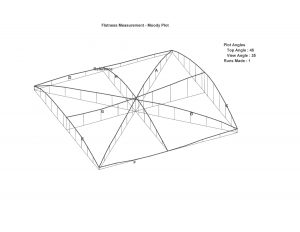
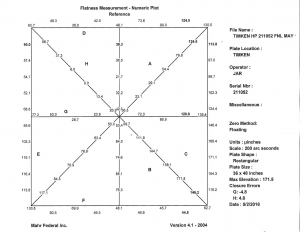
Routine surface plate calibration is necessary to ensure flatness and repeatability over time. The precision measurement group at Cross is ISO 17025 accredited for calibration of surface plate flatness and repeatability. We utilize the Mahr Surface Plate Certification System featuring:
- Moody and Profile Analysis,
- Isometric or Numeric plots,
- Multiple Run Average, and
- Automatic Grading According to Industry Standards.
The Mahr Computer Assisted Model determines any angular or linear deviation from absolute level, and is ideally suited for highly precise profiling of surface plates.
Intervals between calibrations will vary depending on the frequency of use, the environmental conditions where the plate is located, and the specific quality requirements of your company. Properly maintaining your surface plate may allow for longer intervals between each calibration, helps you avoid the added cost of relapping, and most importantly ensures the measurements you obtain on the plate are as accurate as possible. Although surface plates appear robust, they are precision instruments and should be treated as such. Here are some things to consider regarding care of your surface plates:
- Keep the plate clean, and if possible cover it when it is not in use
- Nothing should be placed on the plate other than gages or pieces to be measured.
- Don’t use the same spot on the plate every time.
- If possible, rotate the plate periodically.
- Respect the load limit of your plate
Precision Granite Base Can Improve Machine Tool Performances
Requirements are constantly increasing in mechanical engineering in general and in machine tool construction in particular. Achieving maximum precision and performance values without increasing costs are constant challenges to being competitive. The machine tool bed is a decisive factor here. Therefore, more and more machine tool manufacturers are relying on granite. Due to its physical parameters, it offers clear advantages that cannot be achieved with steel or polymer concrete.
Granite is a so-called volcanic deep rock and has a very dense and homogeneous structure with an extremely low coefficient of expansion, low thermal conductivity and high vibration damping.
Below you will discover why the common opinion that granite is mainly only suitable as machine base for high-end coordinate measuring machines is long outdated and why this natural material as a machine tool base is a very advantageous alternative to steel or cast iron even for high-precision machine tools.
We can manufacture granite components for dynamic motion, granite components for linear motors, granite components for ndt, granite components for xray, granite components for cmm, granite components for cnc, granite precision for laser, granite components for aerospace, granite components for precision stages...
High Added Value Without Additional Costs
The increasing use of granite in mechanical engineering is not so much due to the massive increase in the price of steel. Rather, it is because the added value for the machine tool achieved with a machine bed made of granite is possible at very little or no extra cost. This is proven by cost comparisons of well-known machine tool manufacturers in Germany and Europe.
The considerable gain in thermodynamic stability, vibration damping and long-term precision made possible by granite cannot be achieved with a cast iron or steel bed, or only at relatively high cost. For example, thermal errors can account for up to 75% of the total error of a machine, with compensation often attempted for by software – with moderate success. Due to its low thermal conductivity, granite is the better foundation for long-term precision.
With a tolerance of 1 μm, granite easily meets the flatness requirements according to DIN 876 for the degree of accuracy 00. With a value of 6 on the hardness scale 1 to 10, it is extremely hard, and with its specific weight of 2.8g/cm³ it almost reaches the value of aluminium. This also results in additional advantages such as higher feed rates, higher axis accelerations and an extension of the tool life for cutting machine tools. Thus, the change from a cast bed to a granite machine bed moves the machine tool in question into the high-end class in terms of precision and performance – at no extra cost.
Granite’s Improved Ecological Footprint
In contrast to materials such as steel or cast iron, natural stone does not have to be produced with a great deal of energy and using additives. Only relatively small amounts of energy are required for quarrying and surface treatment. This results in a superior ecological footprint, which even at the end of a machine’s life surpasses that of steel as a material. The granite bed can be the basis for a new machine or be used for completely different purposes such as shredding for road construction.
Nor are there any shortages of resources for granite. It is a deep rock formed from magma within the earth’s crust. It has ‘matured’ for millions of years and is available in very large quantities as a natural resource on almost all continents, including all of Europe.
Conclusion: The numerous demonstrable advantages of granite compared to steel or cast iron justify the increasing willingness of mechanical engineers to use this natural material as a foundation for high-precision, high-performance machine tools. Detailed information about granite properties, which are advantageous for machine tools and mechanical engineering, can be found in this further article.
A repeat measurement is a measurement of local flatness areas. The Repeat Measurement specification states that a measurement taken anywhere on the surface of a plate will repeat within the stated tolerance. Controlling local area flatness tighter than overall flatness guarantees a gradual change in surface flatness profile thereby minimizing local errors.
Most manufacturers, including imported brands, adhere to the Federal Specification of overall flatness tolerances but many overlook the repeat measurements. Many of the low value or budget plates available in the market today will not guarantee repeat measurements. A manufacturer who does not guarantee repeat measurements is NOT producing plates that meet the requirements of ASME B89.3.7-2013 or Federal Specification GGG-P-463c, or DIN 876, GB, JJS...
Both are critical to ensure a precision surface for accurate measurements. Flatness specification alone is not sufficient to guarantee measurement accuracy. Take as an example, a 36 X 48 Inspection Grade A surface plate, which meets ONLY the flatness specification of .000300". If the piece being checked bridges several peaks, and the gage being used is in a low spot, the measurement error could be the full tolerance in one area, 000300"! Actually, it can be much higher if the gage is resting on the slope of an incline.
Errors of .000600"-.000800" are possible, depending upon the severity of the slope, and the arm length of the gage being used. If this plate had a Repeat Measurement specification of .000050"F.I.R. then the measurement error would be less than .000050" regardless of where the measurement is taken on the plate. Another problem, which usually arises when an untrained technician attempts to resurface a plate on-site, is the use of Repeat Measurements alone to certify a plate.
The instruments that are used to verify repeatability are NOT designed to check overall flatness. When set to zero on a perfectly curved surface, they will continue to read zero, whether that surface is perfectly flat or perfectly concave or convex 1/2"! They simply verify the uniformity of the surface, not the flatness. Only a plate that meets both the flatness specification AND the repeat measurement specification truly meets the requirements of ASME B89.3.7-2013 or Federal Specification GGG-P-463c.
Ask us about or flatness specification and repeat measurement promise by calling +86 19969991659 or emailing INFO@ZHHIMG.COM
Yes, but they can only be guaranteed for a specific vertical temperature gradient. The effects of thermal expansion on the plate could easily cause a change in accuracy greater than the tolerance if there is a change in the gradient. In some cases, if the tolerance is tight enough, the heat absorbed from overhead lighting can cause enough of a gradient change over several hours.
Granite has a coefficient of thermal expansion of approximately .0000035 inches per inch per 1°F. As an example: A 36" x 48" x 8" surface plate has an accuracy of .000075" (1/2 of Grade AA) at a gradient of 0°F, the top and bottom are the same temperature. If the top of the plate warms up to the point where it is 1°F warmer than the bottom, the accuracy would change to .000275" convex ! Therefore, ordering a plate with a tolerance tighter than Laboratory Grade AA should only be considered if there is adequate climate control.
A surface plate should be supported at 3 points, ideally located 20% of the length in from the ends of the plate. Two supports should be located 20% of the width in from the long sides, and the remaining support should be centered. Only 3 points can rest solidly on anything but a precision surface.
The plate should be supported at these points during production, and it should be supported only at these three points while in use. Attempting to support the plate at more than three points will cause the plate to receive its support from various combinations of three points, which will not be the same 3 points on which it was supported during production. This will introduce errors as the plate deflects to conform to the new support arrangement. All zhhimg steel stands have support beams designed to line up with the proper support points.
If the plate is properly supported, precise leveling is only necessary if your application calls for it. Leveling is not necessary to maintain the accuracy of a properly supported plate.
Why Choose Granite for Machine Bases and Metrology Components?
The answer is 'yes' for almost every application. The advantages of granite include: No rust or corrosion, almost immune to warping, no compensating hump when nicked, longer wear life, smoother action, greater precision, virtually non-magnetic, low co-efficient of thermal expansion, and low maintenance cost.
Granite is a type of igneous rock quarried for its extreme strength, density, durability, and resistance to corrosion. But granite is also very versatile– it’s not just for squares and rectangles! In fact, Starrett Tru-Stone confidently works with granite components engineered in shapes, angles, and curves of all variations on a regular basis—with excellent outcomes.
Through our state of the art processing, cut surfaces can be exceptionally flat. These qualities make granite the ideal material to create custom-size and custom-design machine bases and metrology components. Granite is:
machineable
precisely flat when cut and finished
rust resistant
durable
long lasting
Granite components are also easy to clean. When creating custom designs, be sure to choose granite for its superior benefits.
STANDARDS / HIGH WEAR APPLICATIONS
The granite utilized by ZhongHui for our standard surface plate products has high quartz content, which provides greater resistance to wear and damage. Our Superior Black and Crystal Pink colors have low water absorption rates, minimizing the possibility of your precision gages rusting while setting on the plates. The colors of granite offered by ZhongHui result in less glare, which means less eyestrain for individuals using the plates. We have chosen our granite types while considering thermal expansion in an effort to keep this aspect minimal.
CUSTOM APPLICATIONS
When your application calls for a plate with custom shapes, threaded inserts, slots or other machining, you’ll want to select a material like Black Diabase. This natural material offers superior stiffness, excellent vibration dampening, and improved machinability.
Yes, if they are not too badly worn. Our factory setting and equipment allow the optimum conditions for proper plate calibration and rework if necessary. Generally, if a plate is within .001" of the required tolerance, it can be resurfaced on-site. If a plate is worn to the point where it is more than .001" out of tolerance, or if it is badly pitted or nicked, then it will need to be sent to the factory for grinding prior to relapping.
Great care should be exercised in selecting an on-site calibration and resurfacing technician. We urge you to use caution in selecting your calibration service. Ask for accreditation and verify the equipment that the technician will use has a National Inspection Institution traceable calibration. It takes many years to learn how to properly lap precision granite.
ZhongHui provides quick turn-around on calibrations performed in our factory. Send your plates in for calibration if possible. Your quality and reputation depend on the accuracy of your measurement instruments including surface plates!
Our black surface plates have a significantly higher density and are up to three times as stiff. Therefore, a plate made of the black does not need to be as thick as a granite plate of the same size to have equal or greater resistance to deflection. Reduced thickness means less weight and lower shipping costs.
Beware of others who use lower quality black granite in the same thickness. As stated above, properties of granite, like wood or metal, vary by material and color, and is not an accurate predictor of stiffness, hardness, or wear resistance. In fact, many types of black granite and diabase are very soft and not suitable for surface plate applications.
No. The specialized equipment and training necessary to rework these items requires that they be returned to the factory for calibration and rework.
Yes. Ceramic and granite have similar characteristics, and the methods used to calibrate and lap granite can be used with ceramic items as well. Ceramics are more difficult to lap than granite resulting in a higher cost.
Yes, provided that the inserts are recessed below the surface. If steel inserts are flush with, or above the surface plane, they must be spot-faced down before the plate can be lapped. If required, we can provide that service.
Yes. Steel inserts with the desired thread (English or metric) can be epoxy bonded into the plate at the desired locations. ZhongHui uses CNC machines to provide the tightest insert locations within +/- 0.005”. For less critical inserts, our locational tolerance for threaded inserts is ±.060". Other options include steel T-Bars and dovetail slots machined directly into the granite.
Inserts that are properly bonded using high strength epoxy and good workmanship will withstand a great deal of torsional and shear force. In a recent test, using 3/8"-16 threaded inserts, an independent testing laboratory measured the force required to pull an epoxy-bonded insert from a surface plate. Ten plates were tested. Out of these ten, in nine cases, the granite fractured first. The average load at the point of failure was 10,020 lbs. for gray granite and 12,310 lbs. for black. In the single case where an insert pulled free of the plate, the load at the point of failure was 12,990 lbs.! If a work piece forms a bridge across the insert and extreme torque is applied, it is possible to generate enough force to fracture the granite. Partially for this reason, ZhongHui gives guidelines for the maximum safe torque that can be applied the epoxy bonded inserts: https://www.zhhimg.com/standard-thread-inserts-product/
Yes, but only at our factory. At our plant, we can restore almost any plate to 'like-new' condition, usually for less than half the cost of replacing it. Damaged edges can be cosmetically patched, deep grooves, nicks, and pits can be ground out, and the attached supports can be replaced. In addition, we can modify your plate to increase its versatility by adding solid or threaded steel inserts and cutting slots or clamping lips, per your specifications.
Why Choose Granite?
Granite is a type of igneous rock formed in the Earth millions of years ago. The composition of igneous rock contained many minerals such as quartz that is extremely hard and wear-resistant. In addition to hardness and wear resistance granite has approximately half the coefficient of expansion as cast iron. As its volumetric weight is approximately one third that of cast iron, granite is easier to manoeuvre.
For machine bases and metrology components, black granite is the colour most used. Black granite has a higher percentage of quartz than other colours and is, therefore, the hardest wearing.
Granite is cost-effective, and cut surfaces can be exceptionally flat. Not only can it be hand lapped to achieve extremes of accuracy, but re-conditioning can be performed without moving the plate or table off-site. It is entirely a hand lapping operation and generally costs much less than re-conditioning a cast iron alternative.
These qualities make granite the ideal material to create custom-size and custom-design machine bases and metrology components such as the granite surface plate.
ZhongHui produces bespoke granite products that are created to support specific measurement requirements. These bespoke items vary from straight edges to tri squares. Due to the versatile nature of granite, the components can be produced to any size required; they are hard wearing and long-lasting.
Advantages of Granite Surface Plates
The importance of measuring on an even surface was established by British inventor Henry Maudsley in the 1800s. As a machine tool innovator, he determined that consistent production of parts required a solid surface for reliable measurements.
The industrial revolution created a demand for measuring surfaces, so engineering company Crown Windley created manufacturing standards. The standards for surface plates were first set by Crown in 1904 using metal. As the demand and cost for metal increased, alternative materials for the measuring surface were investigated.
In America, monument creator Wallace Herman established that black granite was an excellent surface plate material alternative to metal. As granite is non-magnetic and doesn’t rust, it soon became the preferred measuring surface.
A granite surface plate is an essential investment for laboratories and test facilities. A granite surface plate of 600 x 600 mm can be mounted on a support stand. The stands provide a working height of 34” (0.86m) with five adjustable points for levelling.
For reliable and consistent measurement results, a granite surface plate is crucial. As the surface is a smooth and stable plane, it enables instruments to be carefully manipulated.
The main advantages of granite surface plates are:
• Non-reflective
• Resistant to chemicals and corrosion
• Low coefficient of expansion compared with cart iron so less affected by temperature change
• Naturally rigid and hard-wearing
• The plane of the surface is unaffected if scratched
• Will not rust
• Non-magnetic
• Easy to clean and maintain
• Calibration and resurfacing can be done onsite
• Suitable for drilling for threaded support inserts
• High vibration damping
For many shops, inspection rooms and laboratories, precision granite surface plates are relied on as the basis for accurate measurement. Because every linear measurement depends on an accurate reference surface from which final dimensions are taken, surface plates provide the best reference plane for work inspection and layout prior to machining. They also are ideal bases for making height measurements and gaging surfaces. Further, a high degree of flatness, stability, overall quality and workmanship make them a good choice for mounting sophisticated mechanical, electronic and optical gaging systems. For any of these measurement processes, it is imperative to keep surface plates calibrated.
Repeat Measurements and Flatness
Both flatness and repeat measurements are critical to ensure a precision surface. Flatness can be considered as all points on the surface being contained within two parallel planes, the base plane and the roof plane. The measurement of distance between the planes is the overall flatness of the surface. This flatness measurement commonly carries a tolerance and may include a grade designation.
The flatness tolerances for three standard grades are defined in the federal specification as determined by the following formula:
Laboratory Grade AA = (40 + diagonal² / 25) x 0.000001 inch (unilateral)
Inspection Grade A = Laboratory Grade AA x 2
Tool Room Grade B = Laboratory Grade AA x 4
In addition to flatness, repeatability must be ensured. A repeat measurement is a measurement of local flatness areas. It is a measurement taken anywhere on the surface of a plate that will repeat within the stated tolerance. Controlling local area flatness to a tighter tolerance than overall flatness guarantees a gradual change in surface flatness profile, thereby minimizing local errors.
To ensure a surface plate meets both the flatness and repeat measurement specifications, manufacturers of granite surface plates should use Federal Specification GGG-P-463c as a basis for their specifications. This standard addresses repeat measurement accuracy, material properties of surface plate granites, surface finish, support point location, stiffness, acceptable methods of inspection and installation of threaded inserts.
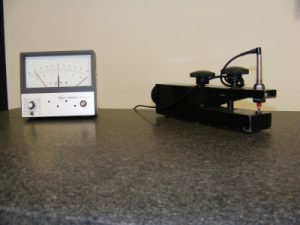
Before a surface plate has worn beyond specification for overall flatness, it will show worn or wavy posts. Monthly inspection for repeat measurement errors using a repeat reading gage will identify wear spots. A repeat reading gage is a high-precision instrument that detects local error and can be displayed on a high magnification electronic amplifier.
Checking Plate Accuracy
By following a few simple guidelines, an investment in a granite surface plate should last for many years. Depending on plate usage, shop environment and required accuracy, frequency of checking the surface plate accuracy varies. A general rule of thumb is for a new plate to receive a full recalibration within one year of purchase. If the plate is used frequently, it is advisable to shorten this interval to six months.
Before a surface plate has worn beyond specification for overall flatness, it will show worn or wavy posts. Monthly inspection for repeat measurement errors using a repeat reading gage will identify wear spots. A repeat reading gage is a high-precision instrument that detects local error and can be displayed on a high magnification electronic amplifier.
An effective inspection program should include regular checks with an autocollimator, providing actual calibration of overall flatness traceable to National Institute of Standards and Technology (NIST). Comprehensive calibration by the manufacturer or an independent company is necessary from time to time.
Variations Between Calibrations
In some cases, there are variations between surface plate calibrations. Sometimes factors such as surface change resulting from wear, incorrect use of inspection equipment or use of noncalibrated equipment can account for these variations. The two most common factors, however, are temperature and support.
One of the most important variables is temperature. For instance, the surface might have been washed with a hot or cold solution prior to calibration and not allowed sufficient time to normalize. Other causes of temperature change include drafts of cold or hot air, direct sunlight, overhead lighting or other sources of radiant heat on the surface of the plate.
There also can be variations in the vertical temperature gradient between winter and summer. In some cases, the plate is not allowed sufficient time to normalize after shipment. It is a good idea to record the vertical gradient temperature at the time the calibration is performed.
Another common cause for calibration variation is a plate that is improperly supported. A surface plate should be supported at three points, ideally located 20% of the length in from the ends of the plate. Two supports should be located 20% of the width in from the long sides, and the remaining support should be centered.
Only three points can rest solidly on anything but a precision surface. Attempting to support the plate at more than three points will cause the plate to receive its support from various combinations of three points, which will not be the same three points on which it was supported during production. This will introduce errors as the plate deflects to conform to the new support arrangement. Consider using steel stands with support beams designed to line up with the proper support points. Stands for this purpose are generally available from the surface plate manufacturer.
If the plate is properly supported, precise leveling is only necessary if an application specifies it. Leveling is not necessary to maintain the accuracy of a properly supported plate.
It is important to keep the plate clean. Airborne abrasive dust is usually the greatest source of wear and tear on a plate, as it tends to embed in workpieces and the contact surfaces of gages. Cover plates to protect them from dust and damage. Wear life can be extended by covering the plate when not in use.
Extend Plate Life
Following a few guidelines will reduce wear on a granite surface plate and ultimately, extend its life.
First, it is important to keep the plate clean. Airborne abrasive dust is usually the greatest source of wear and tear on a plate, as it tends to embed in workpieces and the contact surfaces of gages.
It also is important to cover plates to protect it from dust and damage. Wear life can be extended by covering the plate when not in use.
Rotate the plate periodically so that a single area does not receive excessive use. Also, it is recommended to replace steel contact pads on gaging with carbide pads.
Avoid setting food or soft drinks on the plate. Many soft drinks contain either carbonic or phosphoric acid, which can dissolve the softer minerals and leave small pits in the surface.
Where to Relap
When a granite surface plate needs re-surfacing, consider whether to have this service performed on-site or at the calibration facility. It is always preferable to have the plate relapped at the factory or a dedicated facility. If, however, the plate is not too badly worn, generally within 0.001 inch of the required tolerance, it can be resurfaced on-site. If a plate is worn to the point where it is more than 0.001 inch out of tolerance, or if it is badly pitted or nicked, then it should be sent to the factory for grinding prior to relapping.
A calibration facility has the equipment and factory setting providing the optimum conditions for proper plate calibration and rework if necessary.
Great care should be exercised in selecting an on-site calibration and resurfacing technician. Ask for accreditation and verify the equipment that the technician will use has a NIST-traceable calibration. Experience also is an important factor, as it takes many years to learn how to correctly lap precision granite.
Critical measurements start with a precision granite surface plate as a baseline. By ensuring a reliable reference by using a properly calibrated surface plate, manufacturers have one of the essential tools for reliable measurements and better quality parts.
Checklist for Calibration Variations
- The surface was washed with a hot or cold solution prior to calibration and was not allowed sufficient time to normalize.
- The plate is improperly supported.
- Temperature change.
- Drafts.
- Direct sunlight or other radiant heat on the surface of the plate. Be sure that overhead lighting is not heating the surface.
- Variations in the vertical temperature gradient between winter and summer. If at all possible, know the vertical gradient temperature at the time the calibration is performed.
- Plate not allowed sufficient time to normalize after shipment.
- Improper use of inspection equipment or use of noncalibrated equipment.
- Surface change resulting from wear.
Tech Tips
Because every linear measurement depends on an accurate reference surface from which final dimensions are taken, surface plates provide the best reference plane for work inspection and layout prior to machining.
Controlling local area flatness to a tighter tolerance than overall flatness guarantees a gradual change in surface flatness profile, thereby minimizing local errors.